Linux ubuntu 6.8.0-90-generic #91-Ubuntu SMP PREEMPT_DYNAMIC Tue Nov 18 14:14:30 UTC 2025 x86_64
nginx/1.24.0
: 67.217.245.49 | : 216.73.216.153
Cant Read [ /etc/named.conf ]
8.3.6
www-data
Bypass.pw
Terminal
AUTO ROOT
Adminer
Backdoor Destroyer
Linux Exploit
Lock Shell
Lock File
Create User
CREATE RDP
PHP Mailer
BACKCONNECT
UNLOCK SHELL
HASH IDENTIFIER
Backdoor Scanner
Backdoor Create
Alfa Webshell
CPANEL RESET
CREATE WP USER
README
+ Create Folder
+ Create File
/
usr /
share /
doc /
python3-requests /
[ HOME SHELL ]
Name
Size
Permission
Action
README.md
2.85
KB
-rw-r--r--
changelog.Debian.gz
2.6
KB
-rw-r--r--
copyright
2.92
KB
-rw-r--r--
Delete
Unzip
Zip
${this.title}
Close
Code Editor : README.md
# Requests **Requests** is a simple, yet elegant, HTTP library. ```python >>> import requests >>> r = requests.get('https://httpbin.org/basic-auth/user/pass', auth=('user', 'pass')) >>> r.status_code 200 >>> r.headers['content-type'] 'application/json; charset=utf8' >>> r.encoding 'utf-8' >>> r.text '{"authenticated": true, ...' >>> r.json() {'authenticated': True, ...} ``` Requests allows you to send HTTP/1.1 requests extremely easily. There’s no need to manually add query strings to your URLs, or to form-encode your `PUT` & `POST` data — but nowadays, just use the `json` method! Requests is one of the most downloaded Python packages today, pulling in around `30M downloads / week`— according to GitHub, Requests is currently [depended upon](https://github.com/psf/requests/network/dependents?package_id=UGFja2FnZS01NzA4OTExNg%3D%3D) by `1,000,000+` repositories. You may certainly put your trust in this code. [](https://pepy.tech/project/requests) [](https://pypi.org/project/requests) [](https://github.com/psf/requests/graphs/contributors) ## Installing Requests and Supported Versions Requests is available on PyPI: ```console $ python -m pip install requests ``` Requests officially supports Python 3.7+. ## Supported Features & Best–Practices Requests is ready for the demands of building robust and reliable HTTP–speaking applications, for the needs of today. - Keep-Alive & Connection Pooling - International Domains and URLs - Sessions with Cookie Persistence - Browser-style TLS/SSL Verification - Basic & Digest Authentication - Familiar `dict`–like Cookies - Automatic Content Decompression and Decoding - Multi-part File Uploads - SOCKS Proxy Support - Connection Timeouts - Streaming Downloads - Automatic honoring of `.netrc` - Chunked HTTP Requests ## API Reference and User Guide available on [Read the Docs](https://requests.readthedocs.io) [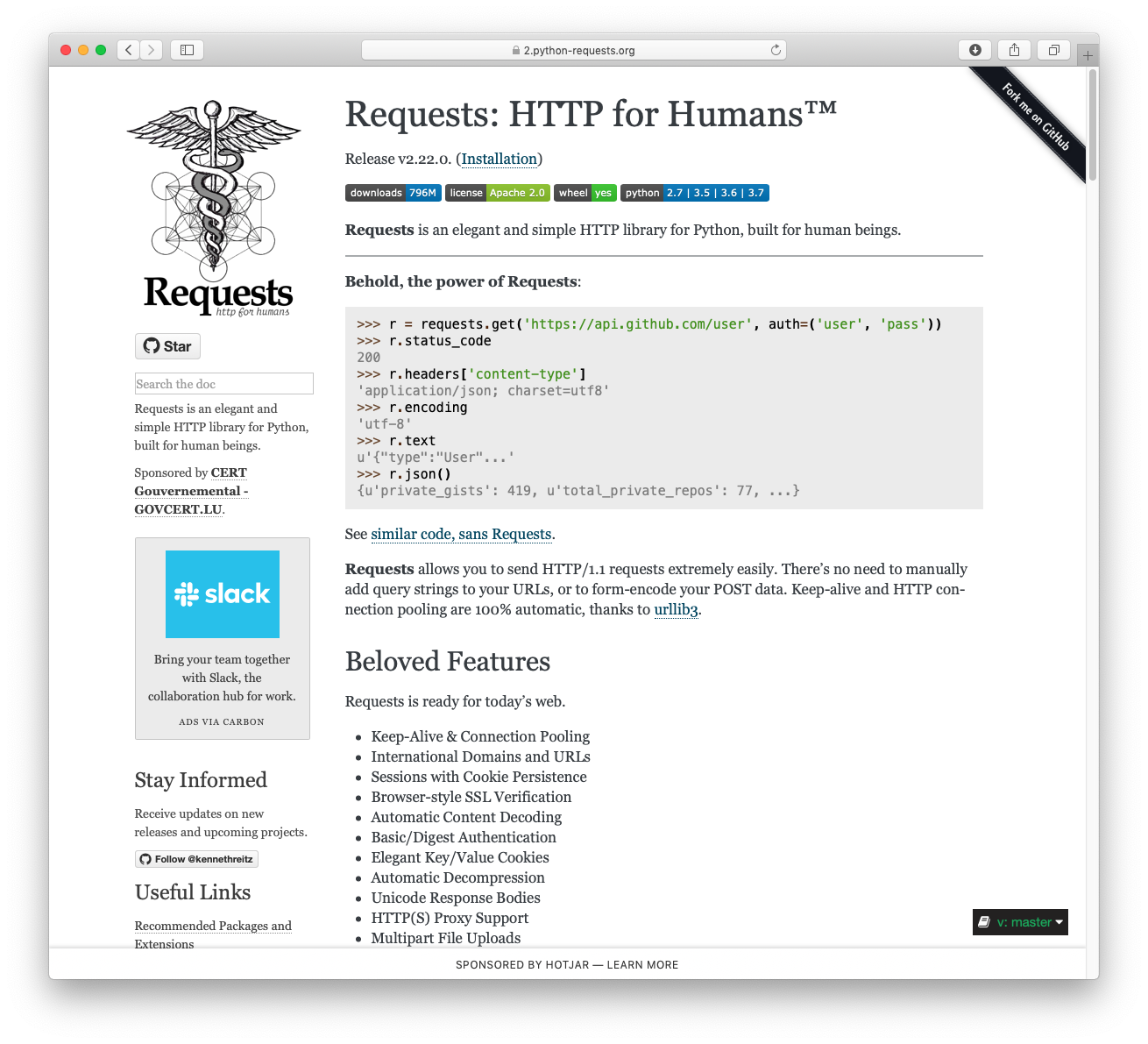](https://requests.readthedocs.io) ## Cloning the repository When cloning the Requests repository, you may need to add the `-c fetch.fsck.badTimezone=ignore` flag to avoid an error about a bad commit (see [this issue](https://github.com/psf/requests/issues/2690) for more background): ```shell git clone -c fetch.fsck.badTimezone=ignore https://github.com/psf/requests.git ``` You can also apply this setting to your global Git config: ```shell git config --global fetch.fsck.badTimezone ignore ``` --- [](https://kennethreitz.org) [](https://www.python.org/psf)
Close